
What does it mean to be cultured?
This question has been on my mind for the last couple of days for two different reasons. The first is that I have been called “cultured” by numerous people in response to my wide and seemingly random array of knowledge. The second is that a coworker of mine, a Black American, recently told me she was envious of someone like me, a first-generation Dominican American who was raised within a rich culture that exists independently of American culture.
It is not the first time I have encountered this sentiment: an American wishing they could belong to a culture outside of America. I replied to my coworker, “America is the most diverse place on the planet; you are more cultured than you realize.”The statement felt both disingenuous and true. My coworker, for one, was not buying it. Naturally, I needed to parse through the idea further.
Though we are using the same word, culture, we are actually talking about two different things. Being cultured generally means having knowledge of and appreciation for different customs, traditions, and ways of life. With enough curiosity and learning, anyone with access to a library or the internet can become cultured in this sense. Though I would argue that to be truly cultured, participation is necessary.
It is one thing to read about and watch videos of a night out in Osaka, Japan. It is an entirely different thing to actually spend the night there. The former is surface-level knowledge; the latter is lived experience. And it is not surface-level knowledge that my coworker envies. What she wants is something much deeper: a sense of belonging and participation in a culture that she finds rich and interesting.
But this is where her sentiment begins to bother me.America is rich and interesting. It is a melting pot, after all. On any given day in Atlanta, my coworker can encounter more cultures than she could possibly experience in a lifetime. I think that is where the heart of the problem lies.
American culture is a culture of excess. There is so much culture that it can sometimes feel as though there is no culture at all.
If we look at culture from a more anthropological perspective, it can be understood as a shared system of beliefs, values, practices, knowledge, symbols, and behaviors that shapes how a group of people lives and understands the world.
The key word is shared.
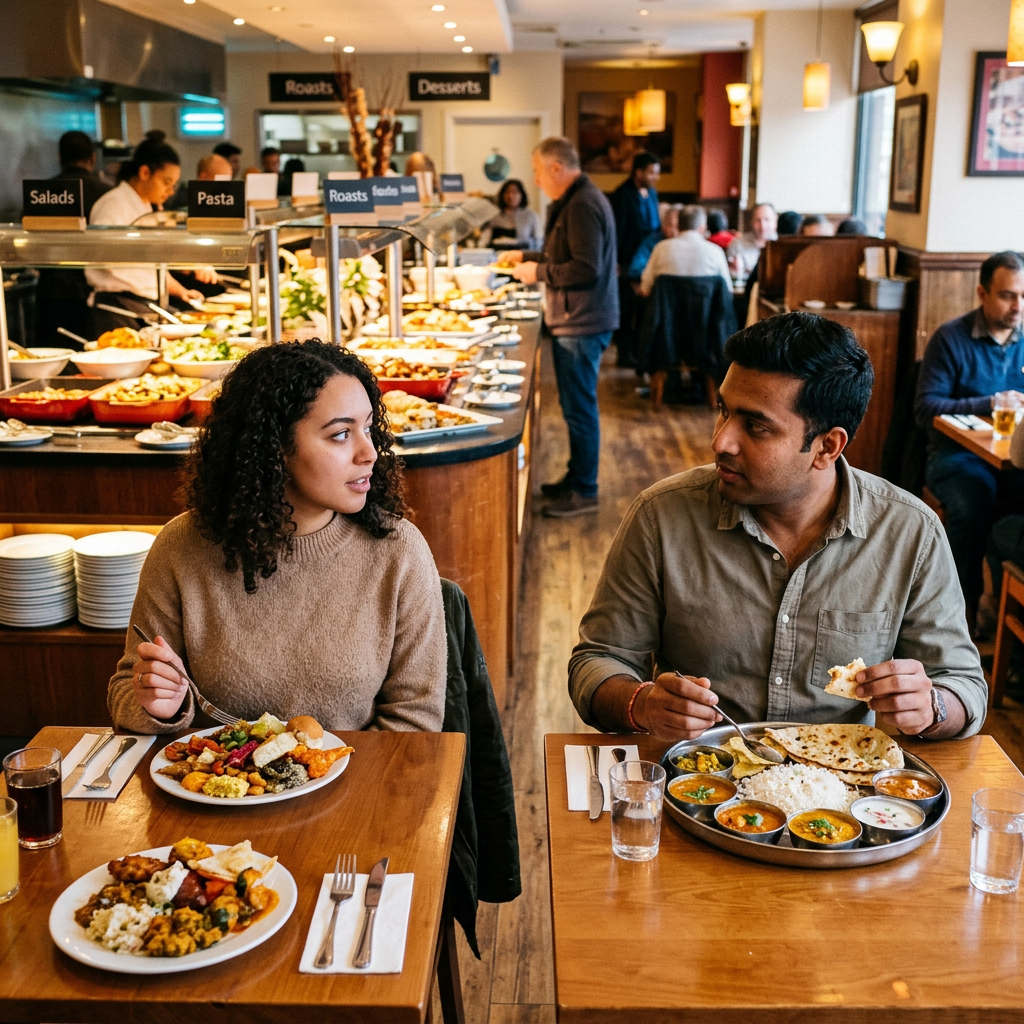
In terms of culture, America often operates like a buffet: you pick and choose what you want from a seemingly limitless array of options. You may be eating alongside your friends at a buffet, but are you truly sharing a meal? You might happen to have some of the same things on your plate, but that is fundamentally different from gathering ingredients as a group, preparing the meal together, and then literally sharing it. That, I think, is more akin to the kind of culture my coworker yearns for.
I would argue that this kind of culture still exists in the United States. It is simply obscured by the excess of our lives. It is much more difficult for the average American to be on the same cultural page as everyone around them unless, perhaps, we are all complaining about gas prices.
As a Dominican, however, I have an almost absurd amount of confidence that I could walk into a random Dominican household and fit in just fine. There is a remarkably consistent set of practices, expectations, values, foods, expressions, and social norms that I can rely on. I don’t need to consciously think about them. I simply know how to participate. Does culture, then, fit into the notion that less is more? I would say so, but only up to a certain point.
When it comes to human flourishing, autonomy is extremely important. Historically, people have fled to America precisely to escape the constraints that cultures can place upon individuals who want to engage with ideas and practices that are frowned upon or outright forbidden.
I love being Dominican, but there is plenty about Dominican culture with which I disagree. I cannot honestly say that I would be better off without the American values that have shaped me as well. My ancestors came to America for a reason. In our case, that reason was primarily economic opportunity. But those opportunities were plentiful, in part, because America lacked the cultural restraints that might have existed elsewhere.
Perhaps being cultured is simply overrated.
Or perhaps the real question is not whether one is cultured, but how much culture we should actually want.


Leave a Reply