
What first drew me to Buddhism was the idea of non-self—the insight that the “self” as we know it is an illusion. At first, this concept can feel deeply counterintuitive. From the moment we’re born, we are flooded with the markers of identity: our name, our birth weight, the exact time we entered the world. We even stamp our tiny feet as if to say, “I am here!” Identity becomes everything.
But when you really sit and contemplate the question, “Who am I?”, you find that it has no solid answer. The deeper you look, the more elusive the self becomes.
I recently came across a beautiful analogy by Thich Nhat Hanh that resonated deeply with how I’ve come to understand this. He writes:
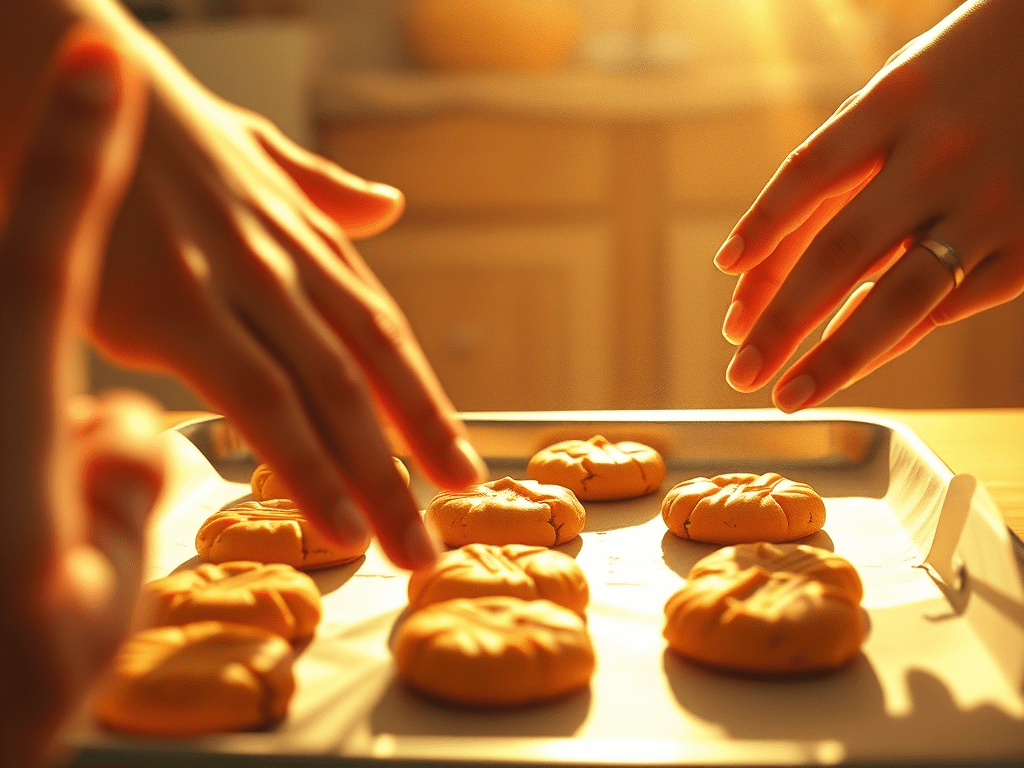
“I learned that to make peanut butter cookies, you mix the ingredients to prepare the batter, and then you put each cookie onto a cookie sheet using a spoon. I imagined that moment each cookie leaves the bowl of dough and is placed onto a tray, it begins to think of itself as separate. You, the creator of the cookies, know better, and you have a lot of compassion for them. You know that they are originally all one, that even now, the happiness of each cookie is still the happiness of all the other cookies.”
We are like those cookies—only far more complex. We are biological, psychological, and social beings, shaped by everything that came before us. Though it may seem as if we come into existence out of nowhere, we are not blank slates. We carry our ancestors within us, and in some way, we will continue to ripple outward long after we’re gone, whether or not we have children.
This understanding has offered me great peace lately, especially in the realm of love.
It’s been about a year since the most loving relationship I’ve ever known came to an end. It was painful. I am single now. And yet—strangely, beautifully—I feel there is more love in my life than before. That’s because I’ve begun to see that love doesn’t just come from being in a relationship. Love arises from awareness—from how we perceive and engage with the world.
J.D. McClatchy once wrote,
“Love is the quality of attention we pay to things.”
Love is not something we get from others. It is something we recognize. It flows through us when we are open to the present moment, when we are connected to life as it is. The non-self teaches us that we are not fixed beings—we are vessels through which love, awareness, and life itself can move.
If those peanut butter cookies were made with love, then love exists in every crumb, regardless of whether the cookie breaks, gets eaten, or never makes it out of the oven. My relationship may have crumbled, but the love it carried still exists. It moves through me, through others, through everything.
Sometimes I walk alone and see a couple holding hands, blissful and connected. A twinge of envy rises—of course it does. I’m human. But then I remember: what I’m really seeing is the love within me, reflected in them. That moment becomes a mirror, not a wound. And in that recognition, I feel full, not empty.
Still, let’s be honest—acknowledging love around you isn’t the same as experiencing it physically and emotionally in a relationship. We are tied to these bodies, after all. The touch of a loved one, the joy of shared presence—these things matter.
But what this practice has given me is the ability to live without depending on those things to feel whole. My wellbeing isn’t anchored to whether or not I’m in a relationship. And that freedom is powerful.
I’ve come to understand that love is not lost when a relationship ends. It simply changes form. It moves. It waits. It reappears in unexpected ways. And when I remember to pay attention, I see that love is everywhere. If life is beautiful, then I am beautiful—whatever “I” may be. For the one is in the all, and the all is in the one.
 Cosmic Latte
Leave a comment